Saturday, March 30, 2013

Astaxanthin--The New Magic Antioxidant

Astaxanthin is a more recently discovered antioxidant being heralded as the new anti-aging miracle. The studies on astaxanthin that are coming to light are showing how versatile it is and how much of the body it has a positive effect on.

Astaxanthin occurs naturally in nature. It is a carotenoid, a pigment, which means it gives color in the organisms that it appears in. The majority of red, orange and yellow plants, as well as flowers and fruits with red, orange and yellow coloring, derive their color from astaxanthin. Birds, fish and insects who eat foods rich in astaxanthin also derive their coloring from the pigment.

Astaxanthin occurs in photosynthetic plants and plays an important role in the photosynthesis process (the process by which plants ingest carbon dioxide and produce oxygen). It also occurs in some simple bacteria and algae which do not engage in photosynthesis, where it serves to protect these simple organisms from light and oxygen. Most pink or red plants have high levels of astaxanthin, and animals who eat astaxanthin-rich foods also have a pinkish color.

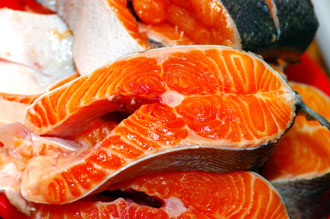
Shrimp, crawfish, crabs, lobsters, krill and other crustaceans are high in astaxanthin. Wild salmon also has high levels of astaxanthin. It is also found in trout.

Commercially produced astaxanthin may be derived from natural sources, such as the microalgae Haematococcus pluvialis, which is the primary natural source, or the pink yeast Xanthophyllomyces dendrorhous. It may also be extracted from byproducts of crustaceans such as krill and shrimp. It also can be chemically synthesized.

The secret that makes astaxanthin such an potent antioxidant is that it is both fat soluble and water soluble.  Most antioxidants are either one or the other, which causes some to be better for your heart, some for your eyes, some for your immune system, etc.  So this antioxidant can go anywhere in your body, and can even go to areas of the body where others can't.  Astaxanthin has up to 500 times the antioxidant power of vitamin E, and 6,000 times stronger than vitamin C.

Though astaxanthin is a carotenoid, like beta-carotene, lutein, and canthaxanthin, its unique structure allows it to work differently than the other carotenoids.  Astaxanthin is a powerful anti-inflammatory, acting on at least 5 inflammatory pathways, and can handle far more free radicals at any given time than other antioxidants.
 
The combination of its high-potency antioxidant and anti-inflammatory properties allows it to address a vast array of health concerns, including joint problems such as rheumatoid arthritis, carpal tunnel syndrome and tennis elbow; protection from UV radiation, improving skin health; improved athletic performance; heart health; brain health, including protection against age-related dementia; and protection against age-related macular degeneration—the most common cause of blindness in the US.
 
 
Over the last few years, there have been at least 17 studies on brain health showing that astaxanthin protects neurons, and can slow the effects of age-related cognitive decline, as well as decline in psychomotor functions.  Studies have also shown that it improves blood flow and decreases blood pressure. It’s very beneficial to your heart’s mitochondria membranes, and can have a positive effect on blood chemistry, increasing HDL (the good cholesterol), and decreasing triglycerides.
There seems to be no or very little toxicity associated with astaxanthin.  “We really have not seen any kind of adverse reactions or negative effects on people taking astaxanthin,” Dr. Cysewski, an expert on astaxanthin, says. “There have been some acute toxicity studies done [with] as high as 50 or 75 milligrams dosage per day. No bad effects.”
 
The most common doses are 2-4 mg per day, though some with chronic inflammation may choose to go higher.
 
We are very excited to announce the release of our "New" SuperMulti Plus.  We have added 3 mg. of astaxanthin to each serving to create a supreme preventative and anti-aging supplement.  Besides adding astaxanthin, we have also added lutein and zeaxanthin for added eye protection, lycopene for added prostate protection (don't worry ladies, it also has health benefits for you as well), and grape seed extract and CoQ 10 for added heart protection.  We also increased the Vitamin D from 1000 to 2000 IU, and doubled the amount of Vitamin K.
 
This is added to the already potent ingredients for bone health, tissue health, high level antioxidant power, high levels of B-vitamins, and good levels of minerals and trace minerals.
 
Our patients keep telling us that once they use SuperMulti Plus they can't use other multivitamins because they don't feel as well.  Many tell us that they never could tell any difference using any other multi, but they can with SuperMulti Plus.  Now with the new ingredients our SuperMulti Plus will be that much more powerful.  And the best is the price, which we have kept below $25, and with multiple purchases the price is even lower.
 
The goal of creating this supplement was to give a high quality, high potency vitamin at a reasonable cost that most people could afford.  We have worked very hard to find a manufacturer that uses high quality ingredients while keeping the cost down.  The ingredients in this cover a multivitamin, calcium/magnesium supplement, B-complex 50, Vitamin D 2,000 IU, Vitamin C with bioflavinoids, Trace Minerals, Eye supplements, antioxidants and carotenoids.  Buying all of this separate would be much over $100.  Now you can afford to maintain your health for less than $25 a month!
 
To purchase our new SuperMulti Plus go to www.springtreehealth.com.
 
Until we meet again,
Dr. Judi

Wednesday, March 6, 2013

More Dietary Sugar Increases Diabetes Risk

In what would be considered a "Duh..." to most people but not to doctors and hospital nutritionists, scientists have now shown that eating more sugar increases the risk of diabetes.

Those who have been in the hospital with a diagnosis of diabetes are often surprised that they are served sugary foods.  I was taught in medical school, and the dieticians are taught that a carb is a carb is a carb.  It doesn't matter if it is fruit or a cup of pudding, when it has the same amount of carbohydrates the body treats it in the same way.

Doctors have always considered obesity to be the "only" risk factor for Type 2 Diabetes.  They thought it was the amount of calories people were eating that created the problem and not the type of food.  However, in this landmark study, lead author Dr. Sanjay Basu, an assistant professor of medicine at the Stanford Prevention Research Center, and colleagues examined data on global sugar availability and diabetes rates from 175 countries over the past decade.

The study, published in the journal PLoS One, found, after accounting for obesity and a large array of other factors, increased sugar in a population's food supply was linked to higher type 2 diabetes rates, independent of obesity rates.

"It was quite a surprise," Basu said in a statement. The research was conducted while Basu was a medical resident at University of California, San Francisco, and working with senior author Dr. Robert Lustig, a pediatric endocrinologist at UCSF Benioff Children's Hospital.

"We're not diminishing the importance of obesity at all, but these data suggest that at a population level there are additional factors that contribute to diabetes risk besides obesity and total calorie intake, and that sugar appears to play a prominent role," the researchers said.

For every additional 150 calories of sugar available per person per day, the prevalence of diabetes in the population rose 1 percent, even after controlling for obesity, physical activity, other types of calories and a number of economic and social variables, the study found.

With the dramatic addition of sugar and high fructose corn syrup to processed foods over the last fifty years, this finally explains to doctors and scientists the major epidemic of Diabetes Type 2 that has exploded in the last 20 years and continues to rise.  Children and teens are now being diagnosed with Diabetes Type 2 at rates that have never been seen before. 
 
Sugary foods have become so engrained in our society that they are almost impossible to escape.  Sugar cereal for breakfast, a can of soda with lunch, candy bars or sugar laden granola bars for snacks, desserts after dinner, a bowl of ice cream before bed, have become the Standard American Diet (SAD).  It is rare to find any processed food without fairly high levels of sugar in it.  The "Low Fat" craze became the high sugar phase to keep the taste palatable.
 
Simple sugars when eaten in higher amounts than found in nature have a drug-like effect on the body, and it is easy to become addicted.  It acts as a powerful neurotransmitter to give a high to the brain.  In today's stress-filled world, we often reach for a sugary snack or drink to calm down without really realizing it.
 
It takes a lot of work and effort to eat a healthy diet low in sugar.  The less processed the food the better, but this is hard in today's society of eat and run, where our young people are no longer taught how to cook homemade, nutritious meals.  But it is amazing how much better most people feel when they cut sugar our of their diet and eat more whole, natural foods.
 
To learn more about diabetes or pre-diabetes, how to know if you have it, the best diet for prevention and treatment, about the medications and how to treat it more naturally, download my free e-book on this page:
 
 
Until we meet again,
Dr. Judi

Saturday, February 9, 2013

Powamu Festival--The Hopi Bean Ceremony, Cycle of Renewal

 I was blessed last weekend to be invited by a sweet Hopi family, along with Ranelle Wallace,  to celebrate the Bean Ceremony with them.  Generally the Hopi ceremonies are closed to non-Hopi unless invited, so this was a once in a lifetime event for me.  I had been reading about the Hopi, their history, their way of life, their ceremonies, their prophecies, and the kachinas for years, and have always wanted to see the Kachinas dance.  This was on my bucket list, and I feel so blessed to have been a part of this.  We travelled down to the Hopi Cultural Center and motel, an hour south of Tuba City, Arizona, on Friday. 

We rose at 0-dark-thirty to get to our friends' house in Hoteville on the Third Mesa by 5:00 a.m.  They lived in a typical Hopi home; theirs had been built in the 1930s; small, rectangular, three rooms, built of yellow stone from the surrounding mesa walls.  They had family from out of town sleeping on the couch with their children.  This festival was like Thanksgiving or Christmas for us.  All of the family members that had left the reservation came back home to the mesa from Phoenix, Tucson and elsewhere for this important and sacred ceremony.  The homes on the mesa are small and simple, made out of stone, or a few out of cinder block, some with solar panels and some without electricity, some with running water and some having to get their water from the spring on the side of the mesa wall.  The Hopi Reservation is like a third world country.  They do not allow photographs of their villages or their ceremonies, but I took this picture from afar, where you can see the small stone houses behind the tree on top of the mesa.

Michelle, the matriarch of the home, was so excited to see us, and excited to take us out into the cold dark to wait for the first part of the ceremony.  I pray I get the facts of the ceremony and the symbolism correct, because her husband, who explained it to us, had had a stroke and couldn't speak well, and English was not his first language.  But I will relate it as I believe he told it.

They took us out, along with one of the children, and stood waiting (in the freezing cold) with a group of other Hopi waiting.  After a time, from the east came a Kachina, in shadow with a sliver of light behind her, because I believe it was the Kachina represented by this doll, the Crow Woman.  (Though the Kachina represented was a woman, all of the Kachinas are men of the tribe in mask and costume.  They become the essence of the spirit of the Kachina when they don the mask.  It is very sacred to them.)

The Crow Woman (Angwusnasomta) was walking very slowly and singing a chant, sounding somewhat like moans.  It was explained that she was crying, remembering the past, bringing it out and letting it go to be able to begin a new cycle.  This ceremony is representative of renewal, rebirth, and fertility--letting the past go and starting anew. 

Each person had a handful of sacred cornmeal that was sprinkled in front of Crow Woman, so that she would walk on sacred ground.  As she reached the group of villagers, they all lined up, sprinkled the corn meal, and made their request to the Crow Woman of health or happiness or whatever blessing they felt they needed.  Then the Crow Woman gave to them each bean sprouts, that they were to plant.  As the bean spouts grew it represented the blessings growing and being fulfilled.  We were not allowed to approach the Crow Woman, but they allowed us to watch.

When this was complete we came back to the house and Michelle fed us a delicious breakfast of eggs and potatoes and their delicious fry bread made from blue corn meal.  This little pot belly stove was their only source of heat.

It wasn't long before someone came in saying "The Kachinas are coming!"  The kids ran out as two Kachinas came up, giving the little girl a Kachina doll and the boy a bow and arrow and a gourd rattle, used in their dances.  These were hand made, beautifully crafted, traditionally made by their uncles, but the children believed they were gifts from the Kachinas.

The girls hang the Kachina dolls on their walls or from the beams of their house.  Each Kachina has a different purpose.  They represent the spirits sent to help them live the Hopi Way and to teach the children to be kind and obedient.  The Hopi believe that the Kachinas live in the San Fernando Mountains and used to come be with them, but because of disobedience they no longer come in solid form, so the men take on their spirits.  The children believe the Kachinas are the true spirits until they are around 8 to 10 years of age, when they are initiated at the Bean Ceremony, and taken into the Kivas where the Kachinas remove their masks and they see that they are actually their relatives and friends, representing the spirits.

The Kivas are underground ceremonial rooms, considered very sacred.  The Hopi ancestors were said to live underground until their world was destroyed and the ant people helped them climb up ladders onto the earth.  The Kivas represent the anthills of the Ant People, who continue to give spiritual help to the Hopi.  They enter and exit the Kivas through ladders.  There were six kivas in the village of Hotevilla.

Sixteen days before the Bean Ceremony, the initiated men and boys bring sand into the Kiva and plant bean seeds.  They showed us the seeds and they appear to be lima beans.  They keep the Kiva hot with a fire burning continuously, and moist, with a blanket over a hole to allow the beans to grow.  Besides the bean sprouts presented by the Crow Woman in the early morning, each family received a large handful of the sacred bean sprouts to make their ceremonial bean sprout soup with.  Here is Michelle preparing the bean sprouts for the soup, and I am cutting salt pork to add to the soup. 

We were blessed to share the meal of bean sprout soup and salt pork.  Michelle had also made piki bread.  Piki bread is a significant food both culturally and nutritionally to the Hopi, and is usually used in ceremonies. The technique used to make the bread is difficult to master and has been passed down from mothers to daughters for generations.  It is becoming more rare as it is difficult to make, so we were excited to experience it.

To make the bread, women finely grind blue corn—which is grown and harvested in the community—and blend it with the burnt ash of juniper berries. The corn meal is then blended with water to produce a light batter that the women spread on a hot, well-seasoned stone with their bare hands. They are placed on the stone while it heats and when they pop, the stone is warm enough to make the bread. The result of this process is a delicate, crispy wafer-thin bread that is is a beautiful grey, blue-green color with a blue corn flavor.

That afternoon we gathered on the streets of the village to see the Kachinas dance.  All of the villagers and their relatives brought out chairs to spend the afternoon.  Many were on the roofs of their homes.

The different Kachinas "lived" in the various six Kivas in the village.  The first ones came out of the first kiva and danced to each kiva as the Kachinas came out.  They danced around the village streets, from kiva to kiva, four times, and then went back the other way, with the Kachinas going back into their kiva the last time.  While they danced the streets many of the Kachinas were seeking out children and giving them the gifts of Kachina dolls and bows and arrows.  The gifts were all very detailed and very different, very beautiful.  The different Kachinas had different purposes.  Some Kachinas entertained, some chased each other and some of the spectators, some threatened violence to the disobedient, etc.  It was a delightful afternoon.

While we were waiting for the Kachinas to pass by between rounds, Ranelle balanced rocks.  The Hopi were fascinated.  One boy came and worked at it but didn't succeed.  A woman came by and gave Ranelle some bean sprouts to plant.  They were all very kind to us, though very white and strangers.

After the Kachinas finished dancing through the village, we found Grandfather Monroe's house, the last living traditional Hopi elder, now 100 years old, holder of the prophecies.

The 15,000 or so Hopis are a small nation, but their sense of burden is great. According to a 900-year-old religious tradition, the Great Spirit Maasau'u, Guardian of the Earth, assigned them the duty of preserving the natural balance of the world and entrusted them with a series of ominous prophecies warning of specific threats and providing guidance on how to avoid them. They tell the world to stop war and care for the earth, or a third disaster would come.  The first and second world wars fulfilled their prophecies with amazing detail.  Their prophecies state a third disaster will come, but the world can change it if they change their way of life and become one people and care for the earth.  Grandfather Monroe is deaf, but we could communicate by writing to him.  He was very concerned because of underground aquafers drying up because of improper use.  He kept saying no one will believe it.

Grandfather Monroe's family said that as a younger man he would run 14 miles a day back and forth to care for his corn fields.  We found out that the woman that gave Ranelle the bean sprouts was part of his family and cared for him.  They invited us in to eat of their bean sprout soup.  They were very gracious and kind, to invite us into their very small home with very many mouths to feed.

 The ceremonies then moved into the Kivas.  We were not allowed in the Kivas but were told we could watch from above.  However, the public dancing didn't start until 1 a.m. and we had a long trip back home the next day, so we chose not to participate.  We were told that this is when the Kachinas remove their masks and show themselves, dancing without their masks in the kiva.

This time with the Hopi will always be etched in my memory.  It will always remind me to cry and release the past and look forward to the blessings of the future.  It will remind me that everything comes and goes in cycles--relationships, trials, life events, and even the earth events.   I choose to work harder at living the way of peace and harmony with my fellow human family and with our Mother Earth. 

Until we meet again,
Dr. Judi


Sunday, February 3, 2013

Lyme Disease--The Silent but Serious Epidemic

In 1975 a new disease seemed to emerge around Lyme and Old Lyme, Connecticut.  It was discovered in 1981 to be a spirochete bacteria spread by the deer tick, and named Lyme Borreliosis, or Lyme disease. 

Not all people with proven Lyme disease get all the symptoms, but a typical acute infection of Lyme disease starts with a "bullseye rash" around the tick bite called "erythema migrans."  Sometimes there isn't a bullseye but simply a central reddening.  This is followed by fever, headache, muscle aches, fatigue and depression.  However, 50% of those with culture proven borreliosis have no memory of a tick bite or a rash.  They may think they have a virus or the flu.  Some Lyme disease resolves on it's own, but usually antibiotics are prescribed for 2-4 weeks. If acute Lyme is a possibility, antibiotics should be given immediately.  Testing does not show positive right away.  Untreated Lyme disease can become a serious and debilitating disease.

If left untreated it may progress to migrating pains in muscles, joints and tendons.  Lyme arthritis usually affects the knees. In a minority of patients, arthritis can occur in other joints, including the ankles, elbows, wrist, hips, and shoulders. Pain is often mild or moderate, usually with swelling at the involved joint.

It may affect the heart with arrhythmias and dizziness.  After several months, it may affect the nervous system.  This can include facial palsy, with paralysis on one or both sides of the face, or meningitis, which causes headaches, neck stiffness, and sensitivity to light.  There may be shooting nerve pains, numbness, tingling in the hands and feet, abnormal skin sensations, memory loss, difficulty concentrating, insomnia, mood changes, and even altered mental status and frank psychosis.

After several months, untreated or inadequately treated patients may go on to develop severe and chronic symptoms that affect many parts of the body, including the brain, nerves, eyes, joints, urinary system and heart. Many disabling symptoms can occur, including permanent paraplegia in the most extreme cases. The associated nerve pain radiating out from the spine is termed Bannwarth syndrome.

Often people with chronic Lyme get co-infections because the Borrelia kills off the immune system.  These can cause any number of other serious symptoms.  I won't go into the different infections here, but this is one of the reasons chronic Lyme is so difficult to treat.  If you have lots of symptoms with no known cause, ask your doctor to test for Lyme Disease using the Western Blot method.  If ANYTHING shows positive, even if it doesn't fit the CDC criteria, antibiotics should be started to see what the response is.  Both improving and worsening indicate that yes, it is probably Lyme disease.


Lyme disease is the most common tick-borne disease in the Northern Hemisphere.  It is prevalent throughout the United States and throughout the world.  However, most doctors sadly don't believe that.  You can see by this map that, even though it is "low risk," there is risk of getting Lyme disease in Utah, but most doctors here in Utah claim it is not here and won't test for it.  I had one patient that tested positive and he took the test to his personal doctor, who even in the face of a very positive test said, "There is no such thing here in Utah."

Most doctors and insurances refuse to accept that Lyme disease can become chronic, even though there is ample proof that it does.  Many insurance companies refuse to pay for more than 30 days of antibiotics for Lyme disease.  Chronic Lyme disease is difficult to treat even for knowledgable doctors, and many patients don't have the funds they need to treat it adequately, IF they can find a doctor that is "Lyme literate."

Part of the problem is because the Borrelia is so good at destroying the immune system that it can't amount a proper defense. Most of the current testing for Lyme includes antibody testing. If the immune system cannot create antibodies, the test may show as negative or indeterminant. If suspected but the testing is negative, antibiotics should be given for 30 days and then test again. Often it may show positive by then.

This disease is spreading like wildfire.  It is now proven to be in Europe.  My niece recently came home from an LDS mission in Poland with a lot of different symptoms and her testing came back positive for Lyme disease.  But if she had seen another doctor she wouldn't have been tested or treated.  My cousin's son became severely ill on his mission in Canada and after several years was on the verge of death before he was diagnosed and able to begin treatement.  He has improved but is still extremely sick, and his wife has now contracted it: it is assumed through sexual contact.

Doctors who treat Lyme are often persecuted by their medical boards, insurance companies and the government.  Those with Lyme and the doctors who treat them are asking everyone to sign a petition to allow proper testing, recognition and treatment of chronic Lyme disease.

Please serve those who are so severely ill with chronic Lyme disease by going to this site and signing the petition to get it recognized, tested properly, treated properly, and paid for by Medicare, Medicaid and private insurance.

https://petitions.whitehouse.gov/petition/reform-infectious-disease-society-america-treatment-guidelines-lyme-disease/Pj9jG0pX

Thank you!

Until we meet again,
Dr. Judi

Wednesday, January 30, 2013

The Danger of Flu--Getting Pneumonia

About 5-20% of the US population gets the flu each year.  The worst months are usually between December and March.  A good portion of those that think they have the flu actually have another virus.  The CDC reported that in the first 3 weeks of January this year about 12,000 people were tested for the influenza virus and only 3,000 tested positive.

In general influenza may make you feel miserable and cause you to miss work, but isn't dangerous.   The symptoms of influenza include fever, headache, cough, chills, sore throat, nasal congestion, muscle aches, loss of appetite, and a general achy and lousy feeling, obviously no fun for anyone.  But the majority of people get better without any medication as their immune system fights the virus.  Anti-viral medication may reduce the symptoms by a few days, if started at the beginning of the illness. Most of the symptoms are actually caused by the immune system, not the virus.

But the danger is, 10% or more of people with influenza may get the serious complication of pneumonia, caused either by the influenza virus or more often by a secondary bacterial infection.  6.3% of those with influenza and pneumonia died in the third week of January this year.  The air sacs in the lungs fill with pus and other fluid, blocking the oxygen from getting into the bloodstream and out to the body.  If there is too little oxygen in the blood stream, the cells cannot work properly and can possibly lead to death.  This is the most common cause of death from influenza.

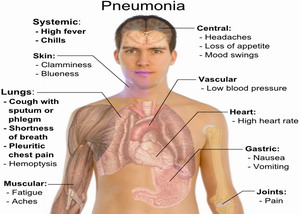
The symptoms of pneumonia include:
  • High fever
  • Shaking chills
  • A productive cough with thick or bloody phlegm
  • Shortness of breath with normal daily activities
  • Chest pain when you breathe or cough
  • Feeling suddenly worse after the flu
  • A general feeling of weakness and ill health 

  • If you're an older adult, you may have fewer and milder symptoms. Remember there is such thing as "walking pneumonia." You may even have a lower than normal temperature. Older adults who catch pneumonia also sometimes have sudden changes in mental awareness because of lack of oxygen to the brain.

     Pneumonia can be surmised from listening to the lungs, with the area filled with fluid having decreased breath sounds, where bronchitis has wet, moist sounds.  But the only way to truly diagonse is with x-ray, showing an opaque area where the fluid has accumulated.

    The people most at risk for pneumonia are those whose immune systems are weaker.  This includes the very young, the very old, people with chronic diseases, those who smoke, people with AIDS, immune systems which have been affected by birth defects, or those on certain medications which weaken the immune system, such as steroids like prednisone.   But old age is the greatest risk factor.  60% of those hospitalized for pneumonia are 65 and older, and 90% of influenza related pneumonia deaths occur in those aged 65 years or older.

    If you suspect that you may have pneumonia, definitely see a doctor and get on antibiotics.  Guaifenisen and nebulizer treatments with simple normal saline help moisten the lungs to be able to better cough up the fluid.  Steroid inhalers can reduce the inflammation. 

    Alternatively, high dose intravenous vitamin C will help, though it should be used in combination with antibiotics.  High dose vitamin A (not beta-carotene) of up to 100,000 IU/day for 3 days, then 50,000 IU/day until symptoms improve, will help strengthen the lining of the lungs to fight the infection.  Dr. Christopher's Lung and Bronchial formula helps to loosen and bring up mucus.  Bromelain and other digestive enzymes, when used between meals, reduce the inflammation.  Colloidal silver can act as a natural antibiotic.  Shiitake and Maitake mushrooms can help support the immune system.  And make sure to use probiotics any time you are on antibiotics.

    Eat well, sleep enough, wash your hands, exercise (but not TOO much), take Vitamin D and C, to build your immune system to prevent getting influenza and prevent getting complications such as pneumonia.

    Until we meet again,
    Dr. Judi


    Sunday, January 27, 2013

    The Incredible Health Effects of Berberine

    Berberine has been found to work as an antibiotic, and anti-fungal/anti-candida agent, reduce LDL cholesterol and triglycerides, support the cardiovascular system, works as an anti-inflammatory, reduces fatty liver disease, reduces leaky gut syndrome, acts as an antidepressant, and has anti-cancer effects.  It also lowers blood sugar and reduces insulin resistance, in one study as effectively as metformin.

    Because people with diabetes are at risk for candida, high cholesterol and triglycerides, heart disease, inflammation, fatty liver, intestinal problems, mood disorders and cancer, they may want to consider taking berberine to not only assist in lowering blood sugar, but in protecting their body from all the risks associated with diabetes.

    (SpringTree Glucose Balance has 500 mg of berberine with each serving.)

    Berberine is a strongly yellow colored compound found in plants such as Oregon grape, Barberry, Goldenseal and others.  It has been used for centuries for both its medicinal properties and as a natural dye.
     
    Berberine is a nucleic acid-binding isoquinolone alkaloid with wide potential therapeutic properties.  Berberine prevents and suppresses proinflammatory cytokines, E-selectin, and genes, and increases adiponectin expression.

    Antibiotic properties
    Berberine has long been used as an antibiotic, such as in Goldenseal.  Studies have shown that it has effectiveness against Staphylococcus Aureus, and possibly against MRSA. 

    Antifungal and antiyeast properties
    Berberine has shown some activity against fungal infections, Candida albicans, yeast, parasites, and bacterial/viral infections. Berberine seems to exert synergistic effects with fluconazole (an anti-fungal medication) even in drug-resistant C. albicans infections. 


    Support of the cardiovascular system
    During the last few decades, many studies have shown berberine has various beneficial effects on the cardiovascular system.  Berberine lowers elevated blood total cholesterol, LDL cholesterol, triglycerides and atherogenic apolipoproteins (Apo B).  It seems to improve arterial endothelial function.  Clinical and experimental studies show that berberine may be useful in congestive heart failure.

    Anti-inflammatory properties
     Berberine has significant anti-inflammatory activities.  It restores cellular redox by inhibiting gp91phos expression and enhancing SOD, the body's super anti-oxidant.  It suppresses pro-inflammatory cytokines and reduces pro-inflammatory gene expression.

    Profoundly positive effects in diabetes
    Exciting new research is showing that berberine has been shown to lower elevated blood glucose as effectively as metformin.  Using 500 mg. three times per day, there were significant decreases in hemoglobin A1C, fasting blood glucose, after meal (postprandial) blood glucose, and triglyceride levels.  The mechanisms of action include inhibition of aldose reductase, inducing glycolysis, preventing insulin resistance through increasing insulin receptor expression and acting like incretins.  A new study suggested berberine may overcome insulin resistance via modulating key molecules in insulin signaling pathway, leading to increased glucose uptake in insulin-resistant cells.

    Fatty liver disease
    Berberine reduces hepatic fat content in the rats of nonalcoholic fatty liver disease. Berberine also prevents proliferation of hepatic stellate cells (HSCs), which are central for the development of fibrosis during liver injury.

    Cancer
    Berberine has drawn extensive attention towards its antineoplastic effects. It seems to suppress the growth of a wide variety of tumor cells, including breast cancer, leukemia, melanoma, epidermoid carcinoma, hepatoma, pancreatic cancer, oral carcinoma, tongue carcinoma, glioblastoma, prostate carcinoma and gastric carcinoma. Animal studies have shown that berberine can suppress chemical-induced carcinogenesis, clastogenesis, tumor promotion, tumor invasion, prostate cancer, neuroblastoma, and leukemia.

    Brain and Mental Health
    Berberine seems to act as an herbal antidepressant and a neuroprotector against neurodegenerative disorders.  As berberine is a natural compound that has been safely administered to humans, preliminary results have been found in clinical trials in patients with depression, bipolar affective disorder, schizophrenia, or related diseases in which cognitive capabilities are affected, with either the extract or pure berberine.   It increases noradrenaline and serotonin levels in the brain (rats) while inhibiting dopaminergic activity.  It may increase the number of serotonin transporters available in the brain, enhacing the reuptake of serotonin.  The half-life of berberine in vivo seems to be three to four hours, thus suggesting administration three times a day if steady levels are to be achieved.

    New experimental results suggest berberine may have a potential for inhibition and prevention of Alzheimers Disease(AD), mainly through both cholinesterase (ChEs) inhibitory and β-amyloids pathways, and additionally through antioxidant capacities.

    Intestinal Disorders
    As an antibiotic and antifungal berberine reduces intestinal dysbiosis (abnormal gut bacteria and yeast).  Berberine can ameliorate proinflammatory cytokines-induced intestinal epithelial tight junction damage (which causes "leaky gut syndrome") in vitro, and berberine may be one of the targeted therapeutic agents that can restore barrier function in intestinal disease states.

    Consider Berberine as one of your regular supplements, especially if you have pre-diabetes or diabetes.

    Until we meet again,
    Dr. Judi


    Friday, January 18, 2013

    Preventing and Treating the Flu and Other Viruses Naturally

    This season is supposed to be the worst flu season in ten years.  It is true that there is a lot of illness going around this winter, however, most people don't actually have the flu.  The "stomach flu" is not actually from the influenza virus; it is caused by other viruses.  The influenza virus causes respiratory illness, however, what most people consider the flu may actually be just a bad cold.

    Most people who actually get the flu are sick for a week or two and get better.  Most people who get colds are sick for a few days to a couple of weeks and get better.  However, if the immune system is weakened, colds and the flu can worsen and become bronchitis or even pneumonia.  Most of the deaths caused by the influenza virus are caused by pneumonia, because antibiotics cannot kill a virus.

    The majority of illnesses in winter are viruses.  The flu and colds are from viruses.  Even most bronchitis is related to viruses.  However, if the immune system is weak, it is easier for a viral infection to become a bacterial infection, and turn into a more serious infection.

    If the immune system is strong, it can usually fight off a bacterial infection even without antibiotics.  Humanity has survived for millenia without antibiotics, because the immune system works.  Antibiotics should be reserved for serious infections that are more prone to overwhelm the immune system.  Using antibiotics for minor infections keeps the immune system weak and causes antibiotic resistance, so that when a major infection comes it is harder to find an antibiotic that works.

    The flu shot is still controversial.  Some people swear it is what keeps them from getting sick.  Others say they get sicker when they get the shot.  I'm sure it depends on each individual's system whether the vaccine helps them or not.  But the truth is, the influenza vaccine has never been proven effective or completely safe.  There is mercury in the multidose vials, and aluminum, formaldehyde and other toxic additives in it.  If you get the single dose vial, instead of mercury you get 2-Phenoxyethanol, an anti-bacterial agent being used as a replacement for the preservative Thimerosal (mercury). This has it's own level of toxicity.  If a person already has a heavy toxic load, known or unknown, the flu shot might worsen the immune system and cause other problems.

    If you decide not to get a flu shot, or even if you do, how do you protect yourself from the winter viruses?  By reducing your exposure and building your immune system.  The following are things you can do to keep yourself healthier during the winter virus season.

    Reducing Exposure

    We are all aware of these--don't leave the house if you are sick, don't go into crowds, wash hands frequently, don't shake hands, avoid being around sick children and others, etc. 

    Cochrane Collaboration research shows that washing your hands frequently is THE BEST way to curb the spread of respiratory infections. Dr. Tom Jefferson of Cochrane told the magazine Der Spiegel… "This method can fight against the 200 pathogens that bring about flu symptoms as well as against gastrointestinal viruses and completely unknown germs. One study done in Pakistan has shown that hand-washing can even save children's lives."
    But since all of these aren't always possible, it is important to build the immune system, so even if you do get sick it is not a serious illness.

    Remember, getting sick is not a bad thing.  If your immune system is healthy, getting sick actually builds your immune system so that it is resistant to getting that illness in the future.  So if you have a healthy immune system and you get the flu this year, it is better than a vaccine at preventing the flu next year.

    Building the Immune System

    Vitamin C--the old standby, but that is because it does make a difference.  For prevention in children use a 500 mg chewable tablet a day, in adults 1,000 to 2,000 mg per day. 

    If your child starts to get sick, increase the dose to 500 mg every 2 hours.  As an adult use 1,000 mg every 1 to 2 hours.  It seems like a lot, but if you study animals, who make their own vitamin C, when they get sick their levels go much higher than this.  When you are sick your body can handle more vitamin C than when well.  It needs more.  If you get diarrhea you can back off, but I haven't seen that happen to those on high doses when they are sick.

    If you get the influenza virus and it is hitting you hard, get high dose (40-60 grams) intravenous vitamin C from your local integrative doctor (www.acamnet.org).  This will usually turn the flu around so that you start to get better rather than worse.  If your doctor does ozone autohemotherapy and ultraviolet therapy (www.ozonetherapies.com) that will add to the effectiveness.

    Vitamin D--the majority of the US population is low in Vitamin D unless they are supplementing, because of the fear of the sun, sunscreen, covering ourselves up, and the angle of the sun in the more northern latitudes.  In my patient population in Utah probably around 90% are lower than optimal, even when they are taking Vitamin D. 

    Ask your doctor to take your level--it is a simple blood test.  In the winter, for full immune protection, we want a level between 60-100.  To keep it at that level you may need 5,000 to 10,000 IU per day.  Most supplements have around 400 IU.  Most people need more than that.  There is one study which shows that adequate levels of vitamin D is more effective than the flu shot in preventing flu.

    If you do get a virus, double your dose of Vitamin D until you are better.  It will lessen the damage done by the virus and support the immune system in fighting it.

    Vitamin A and Beta Carotene

    Getting 5,000 IU of Vitamin A and 10,000 IU of Beta Carotene a day during the flu season supports your immune system and assists the body in fighting off viruses that you may pick up even before symptoms start.

    If you do get a virus, use 50,000 to 100,00 IU of Vitamin A (NOT Beta Carotene--look at the labels) a day for 3 days.  This can be very effective in assisting your immune system to get rid of the virus.

    Other antioxidants

    A good multivitamin/mineral with zinc, selenium, and vitamin E (preferably mixed tocopherols) is also helpful.

    Herbs

    Various herbs and other plants have been used in many indigenous cultures for centuries to support the immune system.  Some of the best: 
    • Astragalus--100 to 150 mg/day for prevention, 3 times a day if you get sick.
    • South African geranium (umckaloabo)--especially with bronchitis, 20 mg/day for prevention, 3 times a day if you get sick
    • Diamond Mills Yeast, baker's yeast, medicinal mushrooms (such as maitake) which all contain Beta-glucan, or Beta-glucan supplements themselves.  I take Diamond Mills Yeast, 1/3 tsp a day, found at animal feed stores.  It is also found in the supplement EpiCor.  Maitake Gold beta-glucan is another source.
    • Echinacea--beware of the source--use liquid extract or product made from the fresh aerial portion of the plant, which should be printed on the label.
    Adequate Sleep

    Sometimes we find ourselves unable to sleep.  This can be related to hormones, anxiety, depression, stress, etc.  Consider using a combination of melatonin, herbs such as valerian root, and 5-HTP.  Homeopathics such as Calms Forte may also work.

    More often we just don't allow ourselves to go to bed on time.  There is always more work to do, or one more TV show to watch, or having to catch up on Facebook, or an exciting book to read.  Flu season is especially the time when you make a choice to get enough sleep.

    Time for Stress Relief

    I find that the only time I get sick is when I choose to be overworked and overstressed.  Meditation, letting go of fears and worries and recognizing that love is all there is, taking time for healthy and relaxing recreation, recognizing that it is not the end of the world if I don't get everything done are more important to keeping well than any precautionary measure or supplement.

    When I am stressed, depressed, angry, upset, or anxious I don't feel well.  When I recognize where my thoughts and feelings are taking me, I choose to deliberately feel the emotions, and then choose to change my perspective.  Stress, worry and negative thinking don't change anything.  So I choose to believe everything is going to work out in the end, even if it seems hard right now, and it does!  Change your thoughts, look at life through rose colored glasses, be a Pollyanna, count your successes rather than your failures, be as kind and loving to yourself as you are to others.

    When I get sick, it is a sign to me to slow down.  If I go to work or out doing errands I expose everyone else to my illness.  I get over it much faster if I just take a day off, relax, find my inner peace and sleep.  Lots of things don't get done, I don't make any money, others are disappointed that I'm not there doing my work, but by doing this I get better much faster and I don't get sick as often.  It works out in the end.

    Take life one day at a time and know that your body has the capacity to heal itself!

    Until we meet again,
    Dr. Judi